The 5 Types of Plasma Bevel Cuts
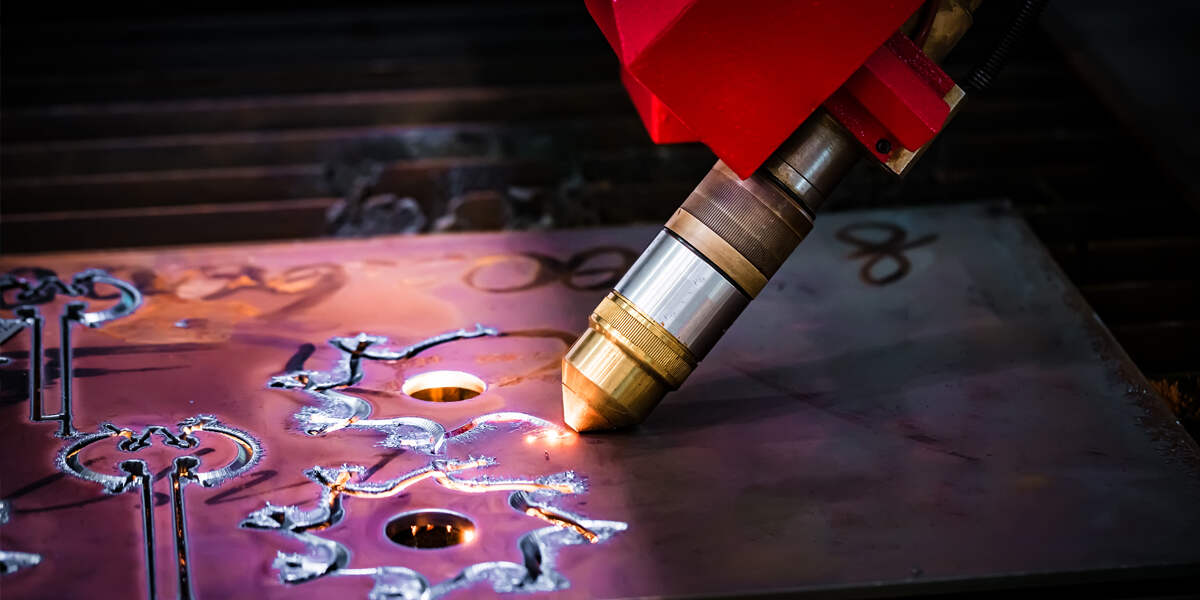
Hypertherm plasma cutters are extremely useful tools. However, sometimes, it’s difficult to get the results you want without a lot of trial and error. To give you a head start, the Cyrious Metal Works team compiled this guide to the five types of bevel cut.
Understanding these and some of the hazards they pose helps you improve your cutting techniques.
Straight Cuts
Most of the time, you’ll set up the torch at a 90° angle to your work surface. This straight-cutting process is very similar to how you position a saw blade in woodworking.
That said, it can be almost impossible to get a completely straight cut. Most metal workers consider a bevel of up to 2° acceptable. Using Hypertherm’s Clean Cut technology, you can halve this angle.
Using Bevel Cuts
Most joiners use bevel cuts when they need an extra-strength, precision joint. The angle makes it easier to fit and join the pieces.
Different Types of Bevel Cuts
There are five basic types. If you’ve ever used a miter saw, you’ll be familiar with these. To visualize each bevel cut, take a look at the letter preceding the name.
A Bevel
This is the most common type. It’s quick and easy, requiring only one pass with the torch. The cut edge sticks out on the top.
K Bevel
This type is the hardest to cut. You’ll need to run the torch over three times to complete it. This cut leaves a vertical section in the center.
V Bevel
This cut is like an inverted “A.” It’s also quick and easy because you only need to pass the torch across once. The cut comes out of the bottom edge.
X Bevel
This cut combines the A and V, leaving the X shape. You’ll need to run the torch over twice. It’s, therefore, a little easier than a K cut.
Y Bevel
You’ll need to choose either a top or bottom. The top Y has a V bevel that doesn’t go all the way through. This leaves a thin slice at the bottom. The bottom Y reverses this, leaving the slice at the top.
Why Are Bevel Cuts More Difficult?
You’ll need to practice a few times to get each of these cuts right. Getting the programming right is tricky. Therefore, it makes sense to practice using scraps a few times.
Doing this will allow you to see the results of each method. You can then better assess the accuracy and quality of the final cut. The advantage of practicing is that it prevents accidents with expensive metal pieces.
You’ll also need to work with new consumables suited to the task. The trial and error process is a bit of a pain, but it can save you from expensive mistakes later.
Contact Us for Expert Advice
Would you like help creating the perfect bevel cut? Need more information on the thickness of a cut? Cyrious Metal Works has the answers, so call our friendly team at 903-771-2462. Le us assist you.